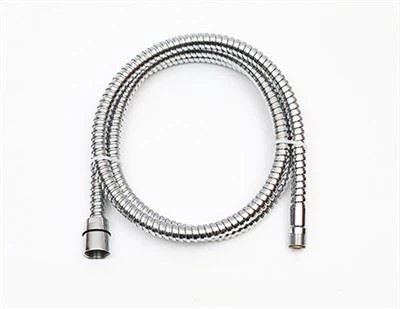
What is the Temperature Resistance Range of PVC Concave - convex Hose?
As a reliable PVC concave - convex hose supplier, I've encountered numerous inquiries from customers regarding the temperature resistance range of our products. Understanding this aspect is crucial as it directly impacts the performance and longevity of the hose in various applications.
Understanding PVC Concave - convex Hose
PVC, or polyvinyl chloride, is a widely used thermoplastic polymer known for its versatility, durability, and cost - effectiveness. The concave - convex design of the hose enhances its flexibility, allowing it to bend easily without kinking. This makes it suitable for a wide range of applications, from household use, such as Silver PVC Shower Hose, to industrial applications where there may be complex piping layouts.
Temperature Resistance Factors
The temperature resistance of PVC concave - convex hose is determined by several factors. Firstly, the formulation of the PVC material plays a significant role. Different additives are used during the manufacturing process to enhance the hose's performance under varying temperature conditions. For instance, plasticizers are added to increase flexibility, and heat stabilizers are included to prevent degradation at higher temperatures.
Secondly, the wall thickness of the hose also affects its temperature resistance. A thicker - walled hose generally has better insulation properties and can withstand a wider temperature range compared to a thinner - walled one. This is because the additional material provides more resistance to heat transfer.
General Temperature Resistance Range
Typically, the temperature resistance range of a standard PVC concave - convex hose is between - 10°C to 60°C (- 14°F to 140°F). At lower temperatures, PVC becomes more rigid. When the temperature drops below - 10°C, the hose may lose its flexibility and become brittle, increasing the risk of cracking or breaking. This is a critical consideration for applications in cold climates or refrigeration systems.
On the other hand, as the temperature rises above 60°C, the PVC material starts to soften. This can lead to a loss of shape and structural integrity. In extreme cases, the hose may even rupture under pressure, posing a safety hazard. For example, in industrial settings where the hose is used to convey hot fluids or in steam applications, the high - temperature limit becomes a crucial factor.
Specialized PVC Concave - convex Hoses
For applications that require a wider temperature range, specialized PVC concave - convex hoses are available. These hoses are engineered with advanced formulations and additives to withstand more extreme temperatures. Some high - performance PVC hoses can endure temperatures as low as - 30°C (- 22°F) and as high as 80°C (176°F). However, it's important to note that these specialized hoses usually come at a higher cost.
Impact of Temperature on Performance
The temperature within which the PVC concave - convex hose operates can significantly impact its performance. In cold temperatures, the reduced flexibility not only makes installation difficult but also restricts the flow of fluids through the hose. The increased stiffness can lead to higher pressure drops, which may affect the efficiency of the entire system.


In high - temperature environments, besides the softening and potential rupture of the hose, there is also the issue of chemical degradation. PVC can release harmful substances when exposed to high temperatures for extended periods. This is a concern, especially in applications where the hose comes into contact with food or drinking water. For example, in a PVC Net Shower Hose used in a hot shower, any chemical release could pose a health risk.
Applications and Temperature Considerations
In household applications, such as shower hoses like the Antibacterial Shower Hose, the temperature range is usually within the standard limits. The water temperature in a shower typically does not exceed 50 - 60°C, and the ambient temperature is generally above - 10°C. However, in industrial settings, the requirements can be much more demanding.
In the automotive industry, PVC concave - convex hoses are used for coolant and fuel lines. These hoses need to withstand the high temperatures generated by the engine as well as the low temperatures during cold starts. The same goes for the chemical industry, where hoses are used to transport various chemicals at different temperatures.
Ensuring Optimal Performance
To ensure the optimal performance of PVC concave - convex hoses, it's essential to choose the right hose for the specific application based on the temperature range. Regular inspection of the hose is also necessary, especially in applications where the temperature conditions are close to the limits of the hose's resistance.
If the temperature in the application is expected to be outside the standard range, it may be necessary to use additional insulation or cooling/heating systems to keep the hose within its safe operating temperature. For example, in a hot - water pipeline, insulating the hose can help reduce heat loss and prevent the hose from overheating.
Conclusion
In conclusion, understanding the temperature resistance range of PVC concave - convex hose is vital for choosing the right product for your application and ensuring its long - term performance. As a PVC concave - convex hose supplier, we can provide you with detailed information about the temperature resistance of our different hose models and help you select the most suitable one for your needs.
If you're interested in our PVC concave - convex hoses or have any questions regarding temperature resistance or other product features, please feel free to contact us for further discussion and potential procurement. We look forward to working with you to meet your specific requirements.
References
- "Polyvinyl Chloride (PVC) Handbook" by Charles A. Daniels
- "Plastics in Engineering Applications" by John Murphy
- Technical documents from PVC resin manufacturers regarding the properties of PVC formulations