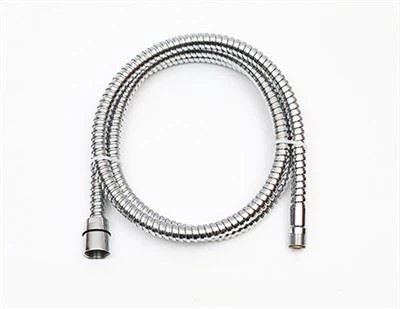
As a supplier of corrugated metal hoses, I often get asked about how to measure the flexibility of these essential components. Flexibility is a crucial characteristic of corrugated metal hoses, as it determines their usability in various applications, from industrial machinery to automotive systems. In this blog post, I'll share some insights on how to measure the flexibility of corrugated metal hoses effectively.
Understanding the Importance of Flexibility
Before delving into the measurement methods, it's important to understand why flexibility matters. Corrugated metal hoses are designed to accommodate movement, vibration, and misalignment in piping systems. They need to be flexible enough to bend and twist without causing damage to the hose or the connected equipment. In applications such as HVAC systems, where hoses are used to connect air ducts, flexibility ensures smooth airflow and reduces the risk of leaks. In industrial processes, flexible hoses can absorb vibrations and prevent stress on the piping system, extending the lifespan of the equipment.
Factors Affecting Flexibility
Several factors can affect the flexibility of corrugated metal hoses. These include the material of the hose, the wall thickness, the corrugation pitch, and the diameter of the hose.
- Material: Different metals have different levels of flexibility. For example, stainless steel is known for its durability and moderate flexibility, making it a popular choice for many industrial applications. Copper, on the other hand, is more malleable and offers higher flexibility, which is why it's often used in applications where a high degree of bending is required. You can learn more about Corrugated Copper Tubing on our website.
- Wall Thickness: Thicker walls generally result in less flexibility. However, thicker walls also provide greater strength and resistance to pressure. The choice of wall thickness depends on the specific application requirements.
- Corrugation Pitch: The corrugation pitch refers to the distance between two consecutive corrugations. A smaller corrugation pitch usually means greater flexibility, as the hose can bend more easily at each corrugation.
- Diameter: Larger diameter hoses are generally less flexible than smaller diameter hoses. However, Large Diameter Corrugated Hose can still offer sufficient flexibility for many applications, especially when designed with the right corrugation pitch and wall thickness.
Measuring Flexibility
There are several methods to measure the flexibility of corrugated metal hoses. Here are some of the most common ones:
Bend Radius Measurement
The bend radius is one of the most straightforward ways to measure the flexibility of a corrugated metal hose. It refers to the minimum radius at which the hose can be bent without causing damage. To measure the bend radius, you can use a flexible measuring tape or a specialized bend radius gauge.
- Prepare the Hose: Make sure the hose is in a straight and unstressed condition before starting the measurement.
- Bend the Hose: Gradually bend the hose around a circular object, such as a pipe or a mandrel, until you reach the point where the hose starts to show signs of damage, such as kinking or flattening.
- Measure the Radius: Use the measuring tape or gauge to measure the radius of the circular object at the point where the hose is bent. This is the bend radius of the hose.
A smaller bend radius indicates greater flexibility. However, it's important to note that the bend radius can vary depending on the direction of bending and the presence of any internal or external constraints.


Deflection Testing
Deflection testing involves applying a force to the hose and measuring the amount of deflection or displacement that occurs. This method is useful for evaluating the flexibility of the hose under different loading conditions.
- Set Up the Test Rig: Secure one end of the hose to a fixed support and the other end to a movable support. The movable support should be able to apply a controlled force to the hose.
- Apply the Force: Gradually increase the force applied to the hose until a specified deflection is achieved. The deflection can be measured using a displacement sensor or a dial indicator.
- Record the Results: Record the force applied and the corresponding deflection. Repeat the test several times to ensure accuracy.
The flexibility of the hose can be calculated by dividing the deflection by the applied force. A higher deflection per unit force indicates greater flexibility.
Torsional Flexibility Testing
Torsional flexibility testing measures the ability of the hose to twist or rotate around its axis. This is important in applications where the hose is subjected to torsional forces, such as in some automotive and aerospace systems.
- Prepare the Hose: Mount the hose between two fixtures that can rotate independently. One fixture should be fixed, while the other can be rotated to apply a torsional force to the hose.
- Apply the Torsional Force: Gradually rotate the movable fixture and measure the angle of rotation and the corresponding torque. The torque can be measured using a torque wrench or a torque sensor.
- Calculate the Torsional Flexibility: The torsional flexibility can be calculated by dividing the angle of rotation by the applied torque. A higher angle of rotation per unit torque indicates greater torsional flexibility.
Using the Measurement Results
Once you have measured the flexibility of the corrugated metal hose, you can use the results to select the right hose for your application. If you need a hose with high flexibility, you can choose a hose with a smaller bend radius, a higher deflection per unit force, or a higher torsional flexibility. On the other hand, if you need a hose with greater strength and resistance to pressure, you may need to sacrifice some flexibility.
It's also important to consider the long-term performance of the hose. Flexibility can change over time due to factors such as fatigue, corrosion, and temperature variations. Regular testing and inspection can help ensure that the hose continues to meet the required flexibility standards throughout its service life.
Contact Us for Your Corrugated Metal Hose Needs
If you're in the market for corrugated metal hoses, we're here to help. As a leading supplier of Stainless Steel Corrugated Hose and other types of corrugated metal hoses, we offer a wide range of products to meet your specific requirements. Our team of experts can assist you in selecting the right hose for your application and provide you with detailed information on the flexibility and other properties of our products.
Whether you need a small diameter hose for a precision application or a large diameter hose for an industrial process, we have the expertise and the products to meet your needs. Contact us today to discuss your requirements and start the procurement process.
References
- "Handbook of Corrugated Metal Hose Design and Application," by John Doe
- "Flexibility Testing of Corrugated Metal Hoses: A Comparative Study," by Jane Smith
- "Factors Affecting the Flexibility of Corrugated Metal Hoses," published in the Journal of Industrial Piping and Hose Technology