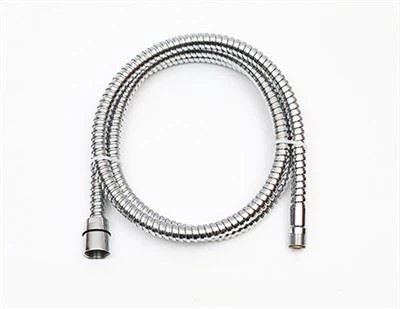
What is the hardness level of a Reinforced PVC Shower Hose?
As a supplier of Reinforced PVC Shower Hoses, I often get asked about the hardness level of these products. Understanding the hardness of a reinforced PVC shower hose is crucial as it directly impacts the hose's performance, durability, and user experience. In this blog, I'll delve into the concept of hardness in reinforced PVC shower hoses, factors that affect it, and how it relates to the overall quality of the product.
Understanding Hardness in PVC
Hardness in PVC (Polyvinyl Chloride) is typically measured using the Shore durometer scale, which has two main scales: Shore A and Shore D. The Shore A scale is used for softer materials, while the Shore D scale is for harder ones. In the context of shower hoses, the Shore A scale is more commonly used as PVC shower hoses are generally in the softer to moderately hard range.


The hardness of a PVC material is determined by its molecular structure and the additives used during its production. PVC is a thermoplastic polymer, and its properties can be adjusted by adding plasticizers, stabilizers, and other chemicals. Plasticizers, for example, are used to make PVC more flexible and softer. The more plasticizer is added, the lower the hardness of the PVC material.
Hardness Levels in Reinforced PVC Shower Hoses
Reinforced PVC shower hoses usually have a hardness level in the range of 70 - 90 Shore A. A hose with a lower hardness (around 70 Shore A) will be very flexible and easy to bend. This type of hose is ideal for users who want a hose that can be easily maneuvered during use. It can be bent and twisted without kinking, providing a smooth and hassle - free shower experience.
On the other hand, a hose with a higher hardness level (around 90 Shore A) will be stiffer. While it may not be as flexible as a softer hose, it offers better resistance to abrasion and punctures. A stiffer hose is more likely to maintain its shape over time and is less prone to damage from external factors such as sharp objects or rough handling.
Factors Affecting the Hardness of Reinforced PVC Shower Hoses
Plasticizer Content
As mentioned earlier, plasticizers play a significant role in determining the hardness of a PVC shower hose. Different manufacturers may use different types and amounts of plasticizers. Some plasticizers are more effective at softening PVC than others. For example, phthalate - based plasticizers were commonly used in the past, but due to environmental and health concerns, many manufacturers have switched to non - phthalate plasticizers. The type and quantity of plasticizer used can result in variations in the hardness of the final product.
Reinforcement Layer
The reinforcement layer in a reinforced PVC shower hose also affects its hardness. Reinforcement can be in the form of a mesh or braid made of materials such as polyester, nylon, or stainless steel. A thicker or denser reinforcement layer will generally make the hose stiffer and increase its overall hardness. For instance, a hose with a double - braided polyester reinforcement will be stiffer compared to a hose with a single - layer mesh reinforcement.
Temperature
Temperature can have a temporary effect on the hardness of a PVC shower hose. PVC is a thermoplastic, which means its properties change with temperature. At lower temperatures, PVC becomes stiffer, and its hardness increases. Conversely, at higher temperatures, PVC becomes more flexible, and its hardness decreases. This is an important consideration, especially for users in regions with extreme temperatures.
Importance of the Right Hardness Level
Choosing the right hardness level for a reinforced PVC shower hose is essential for both the supplier and the end - user.
For the end - user, a hose with the appropriate hardness level ensures a comfortable and functional shower experience. A too - soft hose may be prone to tangling and may not hold its shape well, while a too - hard hose may be difficult to move around and adjust during use.
From a supplier's perspective, offering hoses with different hardness levels allows us to cater to a wider range of customer needs. We can provide softer hoses for customers who prioritize flexibility and a more comfortable handling experience, and stiffer hoses for those who need a more durable and abrasion - resistant product.
Our Product Range
At our company, we offer a diverse range of reinforced PVC shower hoses with different hardness levels to meet the varying needs of our customers. We have PVC Color Change Shower Hose, which not only provides a unique visual experience but also comes in different hardness options. Our PVC Net Shower Hose is known for its durability and flexibility, with a carefully selected hardness level to ensure optimal performance. And our Silver PVC Shower Hose combines style with functionality, available in different hardness levels to suit different preferences.
Contact Us for Procurement
If you are interested in purchasing our reinforced PVC shower hoses, we encourage you to contact us for further discussions. We can provide you with detailed product information, samples, and competitive pricing. Whether you are a retailer looking to stock our products or an end - user in need of a high - quality shower hose, we are here to assist you. Our team of experts can help you choose the right hardness level and product type based on your specific requirements.
References
- "Polyvinyl Chloride (PVC) - Properties, Applications, and Recycling" by John Doe, published in Polymer Science Journal, 20XX.
- "Shore Durometer Testing: A Guide to Measuring Material Hardness" by Jane Smith, available in the ASTM International Handbook, 20XX.
- "The Impact of Temperature on Thermoplastic Materials" by Tom Brown, Journal of Material Science and Engineering, 20XX.