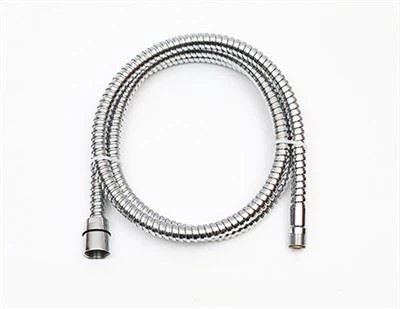
When it comes to enhancing the shower experience, one often overlooks the significance of the shower hose. As a supplier of large diameter shower hoses, I've witnessed a growing interest in these products. A common question that arises is whether large diameter shower hoses require a higher water supply capacity. In this blog post, I'll delve into the science behind it and provide insights to help you make an informed decision.
The Basics of Water Flow and Shower Hoses
To understand the relationship between large diameter shower hoses and water supply capacity, we first need to grasp the basics of water flow. Water flow is measured in gallons per minute (GPM) or liters per minute (LPM). The flow rate is determined by several factors, including the water pressure in your plumbing system, the diameter of the pipes, and any restrictions or obstacles in the water path.
A shower hose acts as a conduit for water to travel from the shower valve to the showerhead. The diameter of the hose plays a crucial role in determining how much water can pass through it. In general, a larger diameter hose allows for a greater volume of water to flow compared to a smaller diameter hose. This is because a larger cross-sectional area provides less resistance to the flow of water.
The Impact of Hose Diameter on Water Flow
Let's take a closer look at how hose diameter affects water flow. According to the principles of fluid dynamics, the flow rate of water through a pipe is proportional to the cross-sectional area of the pipe. The cross-sectional area of a circular pipe is calculated using the formula A = πr², where A is the area and r is the radius of the pipe.
For example, let's compare a standard 1/2-inch diameter shower hose with a large 3/4-inch diameter shower hose. The radius of the 1/2-inch hose is 1/4 inch (0.25 inches), and the radius of the 3/4-inch hose is 3/8 inch (0.375 inches). Using the formula, we can calculate the cross-sectional areas of the two hoses:
- 1/2-inch hose: A = π(0.25)² = 0.196 square inches
- 3/4-inch hose: A = π(0.375)² = 0.442 square inches
As you can see, the 3/4-inch hose has a significantly larger cross-sectional area than the 1/2-inch hose. This means that the 3/4-inch hose can allow more water to flow through it at the same water pressure. In fact, the flow rate through the 3/4-inch hose is approximately 2.25 times greater than the flow rate through the 1/2-inch hose.
Does a Larger Diameter Hose Require a Higher Water Supply Capacity?
Based on the above analysis, it might seem logical to conclude that a larger diameter shower hose requires a higher water supply capacity. However, the reality is more complex. While a larger diameter hose can potentially allow for a greater flow rate, the actual flow rate also depends on the water pressure in your plumbing system.
If your plumbing system has sufficient water pressure, a large diameter shower hose can provide a more powerful and luxurious shower experience without requiring a significant increase in water supply capacity. This is because the higher water pressure can push more water through the larger diameter hose.
On the other hand, if your plumbing system has low water pressure, a large diameter shower hose might not be able to deliver the expected flow rate. In this case, you might need to consider increasing the water supply capacity by installing a booster pump or upgrading your plumbing system.
Other Factors to Consider
In addition to water pressure and hose diameter, there are other factors that can affect the performance of a shower hose. These include:
- Length of the hose: A longer hose can create more resistance to water flow, which can reduce the flow rate. If you need a longer hose, consider choosing a larger diameter hose to compensate for the increased resistance.
- Quality of the hose: A high-quality shower hose is designed to minimize internal friction and maximize water flow. Look for hoses made from durable materials such as stainless steel or reinforced rubber.
- Showerhead design: The design of the showerhead can also affect the flow rate. Some showerheads are designed to restrict water flow to conserve water, while others are designed to provide a high-pressure, full-coverage shower.
Our Product Range
As a supplier of large diameter shower hoses, we offer a wide range of products to meet the needs of our customers. Our hoses are made from high-quality materials and are designed to provide a superior shower experience. Some of our popular products include:
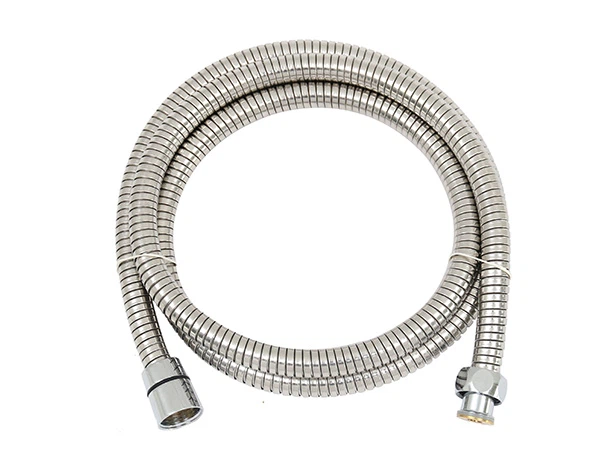
- Stainless Steel Shower Hose: Our stainless steel shower hoses are durable, corrosion-resistant, and easy to clean. They are available in a variety of lengths and diameters to suit your needs.
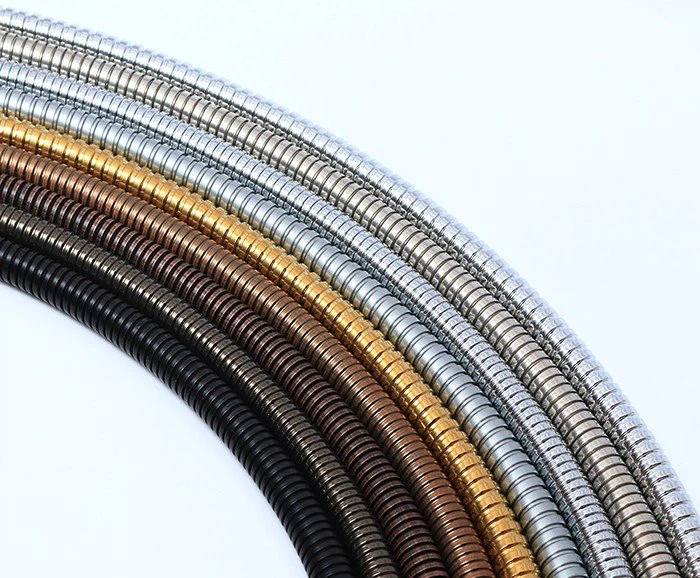
- Golden Shower Hose: Our golden shower hoses add a touch of elegance to your bathroom. They are made from high-quality materials and are available in a range of finishes to match your decor.
- Shower Extension Hose: Our shower extension hoses allow you to extend the reach of your showerhead, making it easier to clean your shower or bathe your children. They are available in a variety of lengths and diameters to suit your needs.
Conclusion
In conclusion, while a larger diameter shower hose can potentially allow for a greater flow rate, the actual flow rate depends on the water pressure in your plumbing system. If your plumbing system has sufficient water pressure, a large diameter shower hose can provide a more powerful and luxurious shower experience without requiring a significant increase in water supply capacity. However, if your plumbing system has low water pressure, you might need to consider increasing the water supply capacity or choosing a different shower hose.
If you're interested in learning more about our large diameter shower hoses or have any questions, please don't hesitate to contact us. We're here to help you find the perfect shower hose for your needs and provide you with the best possible customer service.
References
- Fluid Mechanics: An Introduction to the Theory of Fluid Flows by F. Durst
- Plumbing Engineering: Design and Installation by R. H. Moss